
Cerebrovascular disease assignments essays is something students often look for when the topic starts to feel dense and emotionally heavy. Even though the focus here is the brain and its blood supply, a lot of students come to us saying the content reminds them of cardiac modules because of how blood flow principles repeat across the two systems.
The truth is, cerebrovascular disease sits at a point where theory meets urgent clinical reality. Stroke cases appear daily in hospitals. Many students meet them during ward rotations. A person suddenly unable to speak, or unable to move one side of the body, or just staring blankly and confused. It can be frightening the first time you see it.
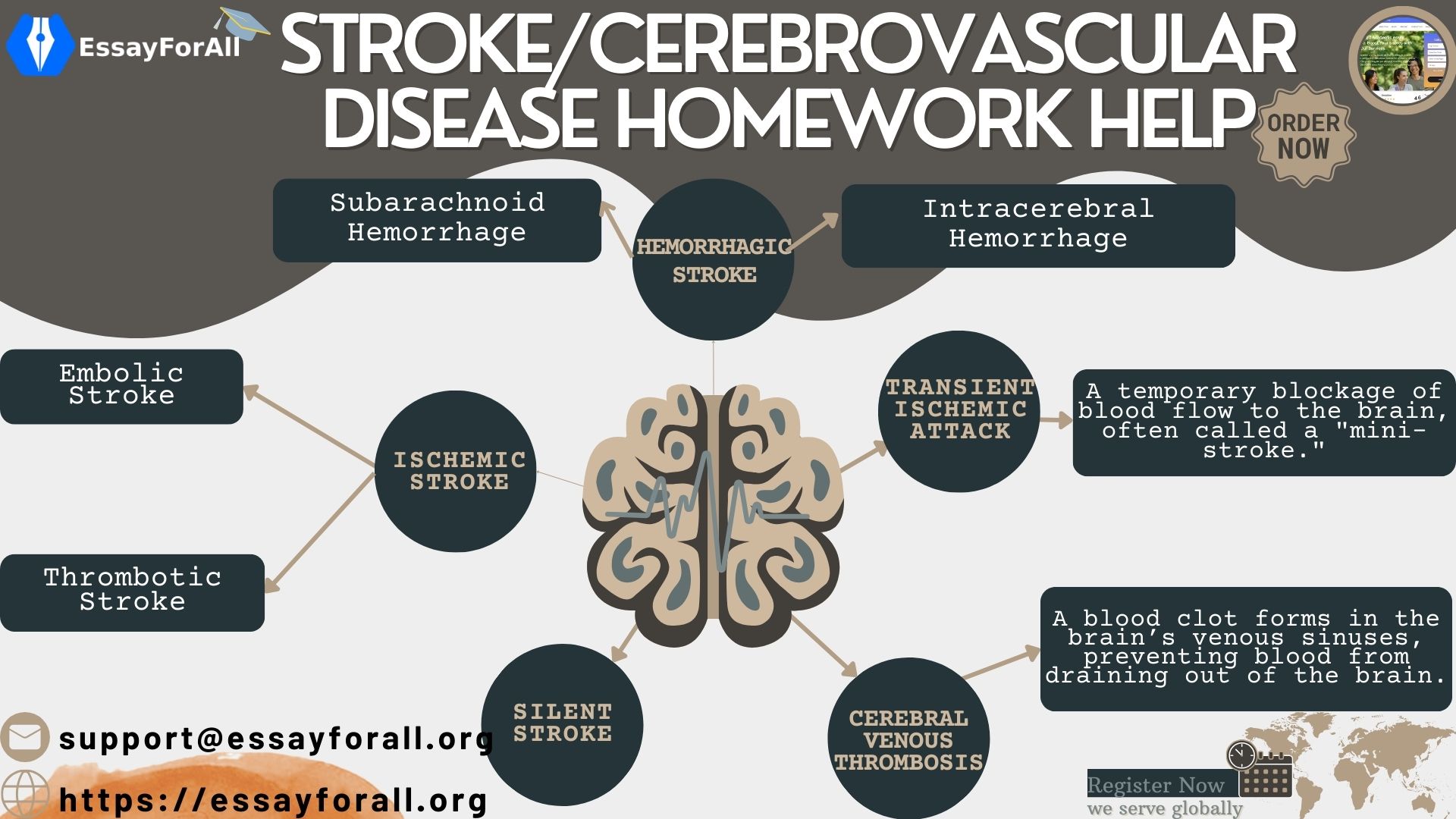
Cerebrovascular disease refers to conditions that interfere with blood circulation in the brain. The brain needs constant oxygen delivery. When vessels narrow, burst, or become blocked, parts of the brain start to lose function. The most recognised outcome is stroke. Some students know this already. Yet once you begin writing assignments, you quickly see that lecturers expect more than definitions. They want reasoning, decision-making, and context.
This is where homework help can lessen some pressure. You still learn, but with someone guiding how to turn content into structured work that gets marked well.
Understanding the Core Idea
Let’s slow the pace slightly. Cerebrovascular comes from two parts:
- Cerebro: relating to the brain
- Vascular: relating to blood vessels
So the term describes blood movement through the brain. When anything interferes with this process, you get cerebrovascular disease. Blockage and bleeding are the two main pathways here. Depending on which artery or region is affected, the effects look different. One person may lose speech. Another may lose movement. Another may lose memory or vision.
I remember the first time a patient tried to speak to me after a stroke. The words were there in their mind, but they came out as sounds that didn’t connect. You can see frustration in their eyes. And sometimes fear too. It stays with you.
What Causes These Disruptions?
There is no single cause. It builds up over time. Sometimes silently.
Some contributors include:
- High blood pressure
When pressure stays high for too long, vessel walls weaken. They may tear or burst. - High cholesterol
Fatty deposits attach to artery walls, narrowing the space blood passes through. - Smoking
Smoking affects vessels and makes blood thicker. It speeds up damage. - Physical inactivity
The less active a person is, the greater the chance of weight gain and reduced circulation efficiency. - Diabetes
High blood sugar affects vessel integrity and nerve function. - Family link
If stroke has appeared in your family before, the likelihood increases. But it isn’t a guarantee. Lifestyle still matters.
Many students mention seeing these risk factors in relatives. It makes the topic feel personal instead of theoretical.
Symptoms That Call for Quick Action
Symptoms vary depending on which part of the brain is affected. Some patients look calm. Some look confused. Some collapse.
Common signs include:
- Sudden loss of movement on one side
- Slurred speech
- Severe headache that appears suddenly
- Loss of balance
- Vision disturbance
- Fainting
- Numbness or unusual sensations
If you have done clinical attachment, you may have heard nurses repeat “Time is brain.” Every passing minute means more brain cells fail.
What Happens After the Event?
Recovery is different for every person. Some regain independence. Some need support for months or years. This is where nursing presence becomes deeply meaningful.
People recovering may face:
- Depression
- Difficulty controlling emotions
- Problems swallowing
- Trouble forming sentences
- Partial or full paralysis
- Loss of bladder control
It isn’t only physical recovery. There is emotional adjustment too. I’ve seen patients cry in frustration during speech therapy sessions. A simple word can take so long to form.
Support comes from different therapists:
- Occupational therapy helps with daily tasks such as bathing, eating, writing.
- Physical therapy focuses on movement and muscle strength.
- Speech therapy helps restore communication ability.
Nurses often become the familiar face guiding them through each day. You observe small progress others might miss. Like when a patient lifts a finger again after months. It seems small, but it’s a step.
How Doctors Identify the Problem
Tests help determine the exact issue so treatment is chosen correctly.
Common assessments include:
- Computed Tomography (CT scan)
Helps locate bleeding or clots. - Carotid Ultrasound
Checks for plaque or narrowing in the carotid arteries in the neck. - Cerebral Angiography
Provides a clear view of vessels, though the process can be uncomfortable. A contrast dye is used. - Magnetic Resonance Imaging (MRI)
Produces detailed brain images. Often used to identify earlier or small strokes.
Other tests you may see in textbooks or hospital files include:
- Doppler ultrasound
- Lumbar puncture
- Electroencephalogram
- Magnetic resonance angiogram
Assignments often expect you to explain why each test matters. This is where many students lose marks, they list instead of interpret. Homework help sessions often correct that part.
Treatment Options
Treatment depends on whether the problem is a blockage or bleeding.
Common medications include:
- Blood pressure drugs
- Blood thinners
- Cholesterol-lowering medication
- Blood sugar control medication
If vessels are severely blocked, surgery may be suggested. Procedures include:
- Carotid angioplasty
- Carotid stenting
- Carotid endarterectomy
- Mechanical thrombectomy
These procedures aim to restore blood flow or remove blockage.
Everyday Measures That Lower Risk
Even healthy individuals can reduce their chance of stroke by paying attention to:
- Weight management
- Regular exercise
- Reducing salt intake
- Limiting alcohol
- Avoiding smoking
- Managing stress gently
- Eating more fibre and fewer saturated fats
Patients often ask what to eat. Simple examples help more than long lists:
- Oats instead of sugary cereal
- Fish instead of red meat a few days a week
- Fresh vegetables as part of most meals
- Water instead of carbonated drinks
These changes seem small, though over time they shape health outcomes.
Homework Help for Cerebrovascular Disease Assignments
Many students tell us the challenge isn’t learning the condition. It’s writing about it clearly. Nursing assignments demand reasoning and structured presentation. Some students know the content yet struggle to explain it in a way markers value.
Our role is not to replace your learning. It’s to support your understanding and help you express it clearly and confidently.
We work through:
- How to interpret case studies
- How to explain pathophysiology without sounding forced
- How to show clinical reasoning
- How to organise your assignment step-by-step
If you feel overwhelmed by deadlines or unsure how to start your work, you can ask for assistance. You still submit your assignment. You are still the student doing the course. But you do it with support that reduces stress.
You do not need to feel alone in this.
You can request help whenever you need it. We stay consistent, responsive, and realistic with expectations. We know the workload nursing students carry. We see it daily.